



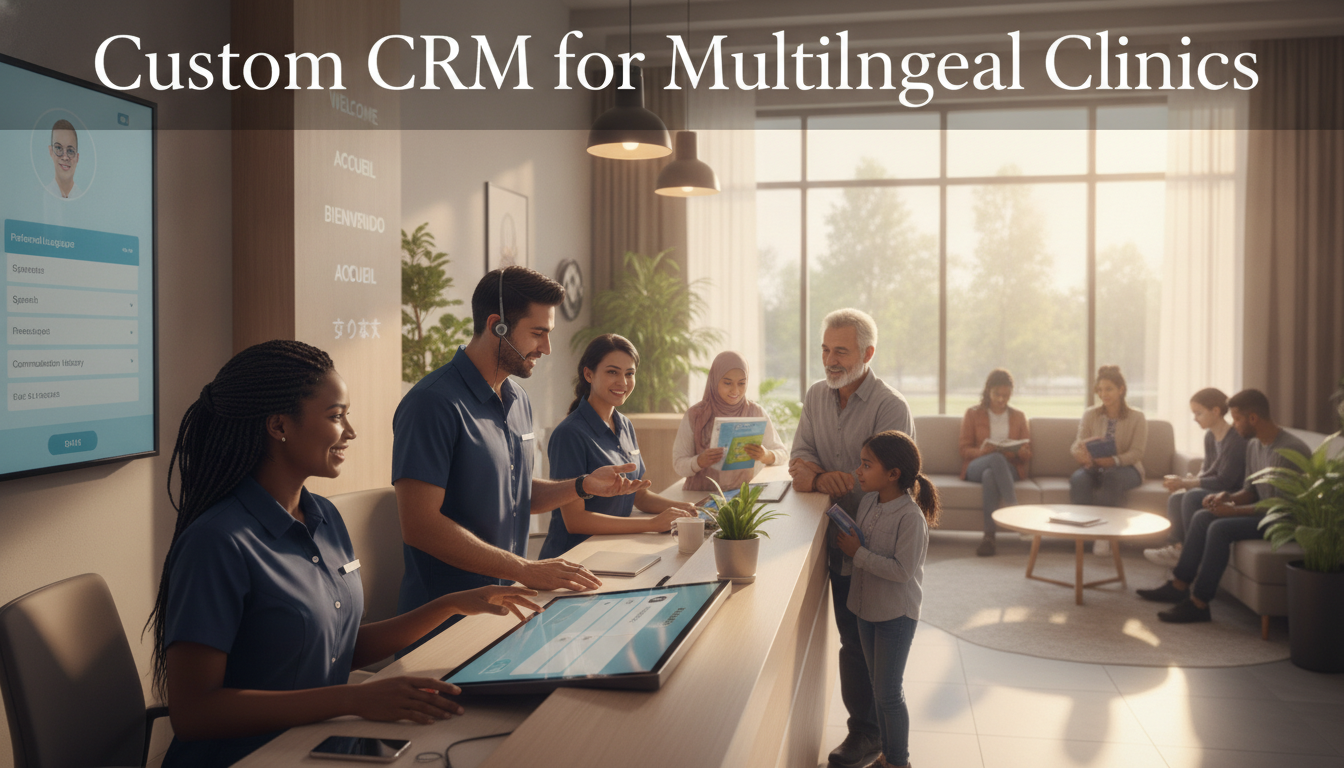
Clinics face the challenge of managing patients who speak different languages. Customizable CRM software offers a solution by enhancing multilingual patient engagement and simplifying operations. By tailoring CRM systems to address language barriers, clinics can improve communication, reduce misunderstandings, and ultimately provide better care.
Multilingual CRM Needs
Multilingual patient management requires understanding the specific needs of patients who may not speak the clinic's primary language. Language barriers can significantly impact patient engagement, leading to miscommunication and dissatisfaction. A clinic's CRM must support language-specific interactions to ensure every patient feels heard and understood.
Language barriers affect more than just communication; they can impact the entire patient journey. Patients need to feel comfortable and understood from the initial enquiry to post-visit follow-ups. For instance, a clinic in a multicultural area might encounter patients speaking Spanish, Mandarin, or Arabic. Each language group may have different cultural expectations and communication needs.
To address these challenges, CRM software should include features that support multilingual operations. This means offering interfaces and communication tools that can adapt to different languages, enabling clinics to handle enquiries, schedule appointments, and send reminders in the patient's language. This improves patient satisfaction and operational efficiency.
However, customization isn't always simple. Implementing these systems can be costly and time-consuming, and not all clinics see immediate benefits.
Customizing CRM for Language-Specific Interactions
Customizing a CRM system to handle language-specific interactions is crucial for clinics serving multilingual populations. The first step is setting up language preferences within the CRM, allowing the system to automatically select the appropriate language for each patient's communication.
Automated language translation is another vital feature. This enables patient inquiries to be translated into the clinic's primary language and vice versa without manual intervention. If a patient sends an enquiry in French, the CRM can translate it into English for the clinic staff and then respond to the patient in French.
Follow-up reminders and communications should also be customized in the patient's preferred language. This personalization shows respect for the patient's language and culture, which can improve patient retention and reduce missed appointments. Clinics can set templates for common reminders and follow-ups, ensuring that these communications are consistent and culturally sensitive.
Managing Multilingual Enquiry Responses
Handling patient enquiries promptly and accurately is essential, especially in a multilingual setting. Automating initial responses in multiple languages ensures that patients receive timely information, regardless of the language they speak. This improves the patient experience and boosts the clinic’s efficiency.
Developing templates for common queries in various languages can further simplify this process. These templates can address frequently asked questions about services, appointment availability, or insurance policies, providing quick and consistent responses. By preparing these templates in advance, clinics can handle a higher volume of enquiries without compromising on quality.
Integrating the CRM with messaging platforms allows for fast and efficient communication. By ensuring that the CRM system works well with platforms like WhatsApp or email, clinics can maintain swift response times. This integration is crucial for clinics that manage high volumes of enquiries and need to provide rapid, multilingual responses.
Optimizing Multilingual Appointment Management
A multilingual CRM can transform how clinics manage appointments. By customizing the scheduling process to accommodate different languages, clinics can ensure that all patients have a clear understanding of their appointments. This involves using language-specific confirmation messages and reminders.
CRM tools can be configured to send appointment confirmations and reminders in the patient's preferred language. This minimizes confusion and helps ensure that patients are aware of their scheduled visits, reducing the likelihood of no-shows. A reminder sent in the patient's native language is more likely to be understood and acted upon.
Addressing language-specific concerns is also important in reducing no-shows. Patients may have questions or concerns that are best addressed in their own language. By using CRM systems that facilitate these interactions, clinics can reassure patients and encourage them to keep their appointments.
Enhancing Post-Visit Multilingual Follow-Up
Post-visit follow-up is a critical component of patient care that can be greatly enhanced by multilingual CRM capabilities. Automating these communications ensures that they are timely and relevant, while also being delivered in the patient's language.
Personalizing follow-up content based on language and cultural preferences demonstrates a clinic’s commitment to patient care. This could include sending health tips, appointment reminders, or satisfaction surveys in the patient’s language, making them feel valued and understood.
Tracking patient feedback and satisfaction by language groups is another way to improve services. CRM analytics can provide insights into how different language groups perceive the clinic's services, allowing for targeted improvements that enhance overall patient satisfaction.
Measuring Success in Multilingual CRM Implementation
To assess the effectiveness of a multilingual CRM system, clinics need to identify key performance metrics. These might include engagement rates, conversion rates, and patient retention figures, segmented by language. Such data helps clinics understand how well they are serving their diverse patient base.
CRM analytics play a crucial role in tracking these metrics. By analyzing engagement and conversion rates across different language groups, clinics can identify areas for improvement. If a particular language group has lower engagement rates, the clinic might need to revisit its communication strategies for that group.
Refining strategies based on data collected from multilingual interactions is essential for continuous improvement. Clinics can use this data to tweak their communication methods, adjust language-specific content, and ultimately provide better patient care across all language groups.
Comparison of CRM Features for Multilingual Patient Management
| Feature | Description | Benefit |
|---|---|---|
| Language Support | Handles multiple languages for communications | Improves patient engagement |
| Automation Capabilities | Automates responses and follow-ups | Saves time and reduces errors |
| Customization Options | Allows tailored communications | Enhances patient satisfaction |
| Integration with Messaging Platforms | Smooth communication across channels | Ensures timely responses |
Automating multilingual responses not only enhances patient experience but also significantly boosts operational efficiency.
Grow your followers and engagement on LinkedIn and Instagram
People check your profiles before they book. We keep them alive: on-brand posts written and published for you across LinkedIn and Instagram, prospects reached and their replies handled, and your follower and engagement growth tracked so you can watch it climb, while you focus on the business.
Content, outreach and reporting, managed every month.